Red light therapy uses specific wavelengths of red and near-infrared light to support natural cellular processes. It’s appearing more often in wellness studios, gyms, and recovery clinics, prompting a reasonable question: what is actually happening beneath the skin, and what can you expect?
This guide explains how red light therapy works in simple terms, where the evidence is strongest, and what a typical session looks like.
How Red Light Therapy Works in Simple Terms
Red light therapy delivers concentrated red and near-infrared wavelengths that are gentle on the skin. These wavelengths do not tan, burn, or behave like UV light.
A portion of the light penetrates several millimetres into the skin, where it interacts with mitochondria, the structures responsible for generating cellular energy. Early research suggests that these wavelengths may help mitochondria produce more ATP, the basic fuel cells use for repair and maintenance. When cells have more usable energy, routine processes may run more efficiently.
This is the core principle behind red light therapy: supporting normal cellular function, not overriding it.
Results vary among individuals, and research is ongoing. Red light therapy should be seen as a supportive tool rather than a stand-alone treatment for medical conditions.
Common Reasons People Use Red Light Therapy
People explore red light therapy for several reasons. Current areas of interest include:
• Improving skin appearance and texture
• Supporting joint and muscle comfort
• Addressing certain forms of hair thinning
• Supporting sleep routines and circadian rhythm
• Creating a calming, low-stress environment
Below is a measured look at each category.
Skin Appearance and Texture
Red light therapy is widely used in skincare. Some studies suggest it may support collagen production and help reduce the appearance of fine lines and uneven texture when used regularly.
It has also been used as a supportive therapy for wound healing and the appearance of some scars.
Results tend to be gradual and modest. It works best alongside foundational habits: sun protection, hydration, and consistent skincare.
Joint and Muscle Comfort
Because red and near-infrared light may influence cellular energy and local circulation, some people use it to support comfort in stiff joints or sore muscles.
Users often report reduced discomfort after consistent sessions over several weeks.
This is not a replacement for physical therapy or medical treatment. It can serve as one supportive option within a broader recovery plan that includes movement, appropriate loading, and rest.
Hair Thinning and Scalp Health
Low-level light therapy has shown potential in certain types of hair thinning, particularly pattern hair loss. Some studies report modest improvements in hair density and thickness with regular use over several months.
Responses vary widely, and the cause of hair loss matters. Anyone considering this application should consult a clinician to set appropriate expectations.
Sleep and Circadian Rhythm
Blue light exposure in the evening can disrupt melatonin production. Red light, in contrast, is less likely to interfere with the body’s nighttime signals.
Some people use red light therapy in the evening as part of a wind-down routine and find it helps them settle before sleep. In many cases, the benefits come from reduced screen exposure and a predictable calming ritual as much as from the light itself.
Mood and Stress
The warm, quiet environment surrounding red light therapy sessions can support relaxation. Early research is exploring how certain wavelengths may influence mood-related pathways, but the evidence is still in development.
Red light therapy is not a treatment for depression, anxiety, or other mental health conditions. At most, it can be a supportive addition to established care, movement, social connection, and restorative routines.
What to Expect in a Session
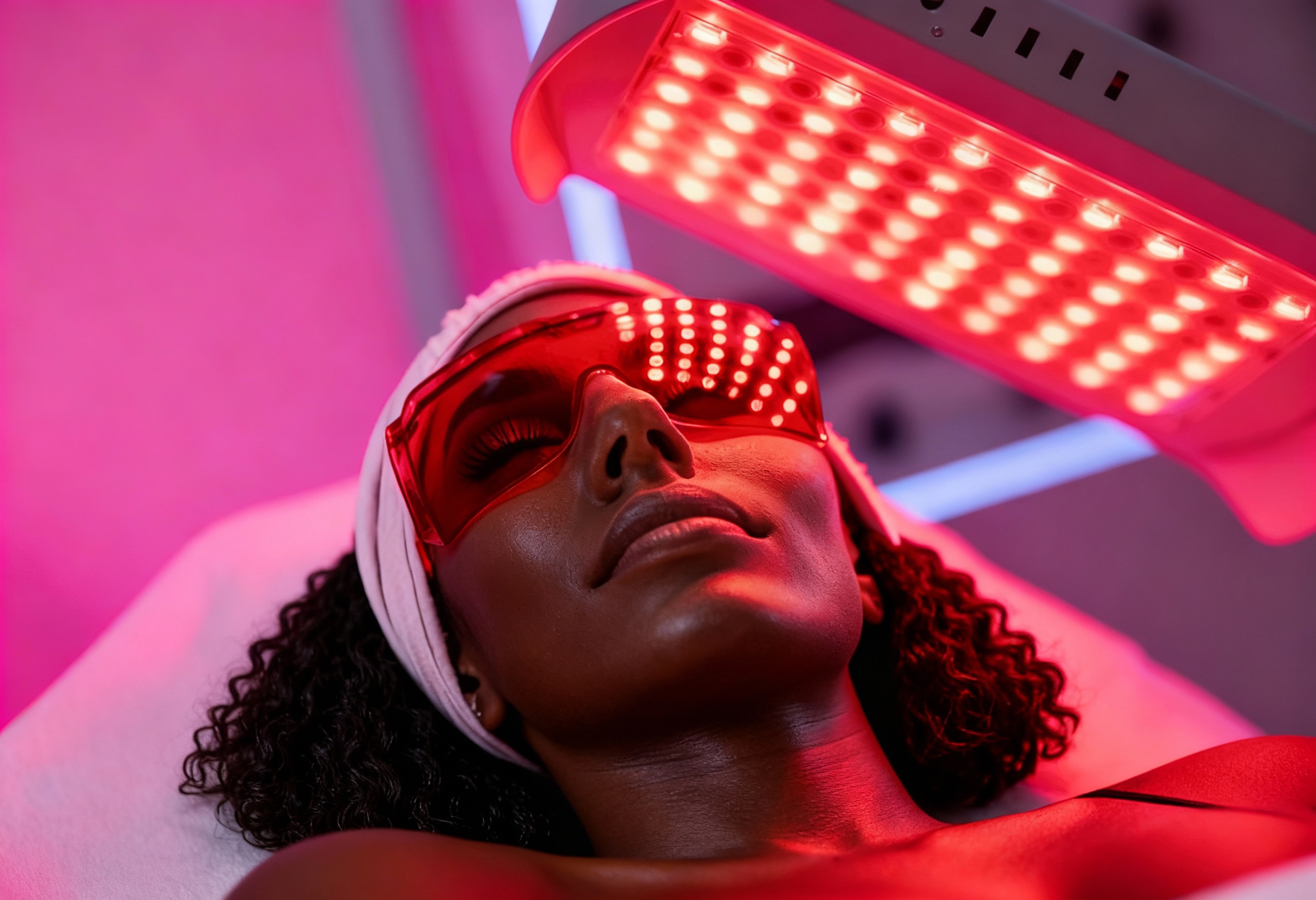
Red light therapy sessions are simple and non-invasive.
• You sit or lie down depending on the area being treated.
• Panels are positioned at a set distance from your skin to deliver consistent exposure.
• Most people feel mild warmth rather than strong heat.
• Sessions often last 10–20 minutes per area.
• Protocols typically involve multiple sessions per week to see cumulative effects.
No gels or lotions are required. You can often rest, listen to audio, or read with appropriate eye protection, depending on the device.
Who Might Consider Red Light Therapy
Red light therapy may interest people who:
• Want non-invasive support for skin appearance
• Hope to ease mild joint or muscle discomfort
• Are exploring options for hair or scalp support in specific types of thinning
• Want a structured, calming recovery routine
Who should use caution
Consult a healthcare professional first if you:
• Have a history of skin cancer or conditions involving photosensitivity
• Take medications that increase light sensitivity
• Are pregnant and unsure whether exposure is appropriate
This information is general and not a substitute for advice tailored to your medical history.
Red Light Therapy in London, Ontario
Red light therapy continues to grow in popularity because it’s gentle, accessible, and backed by a developing, though still evolving, body of research. Many people appreciate it as a structured way to support recovery, skincare goals, and overall wellbeing.
If you are in or near London, Ontario and would like to explore red light therapy, Longevity Lounge offers sessions in a quiet, supervised environment with advanced technology. Our team provides clear explanations of what the therapy can and cannot do, helping you understand how it may fit into your long-term wellness plan.